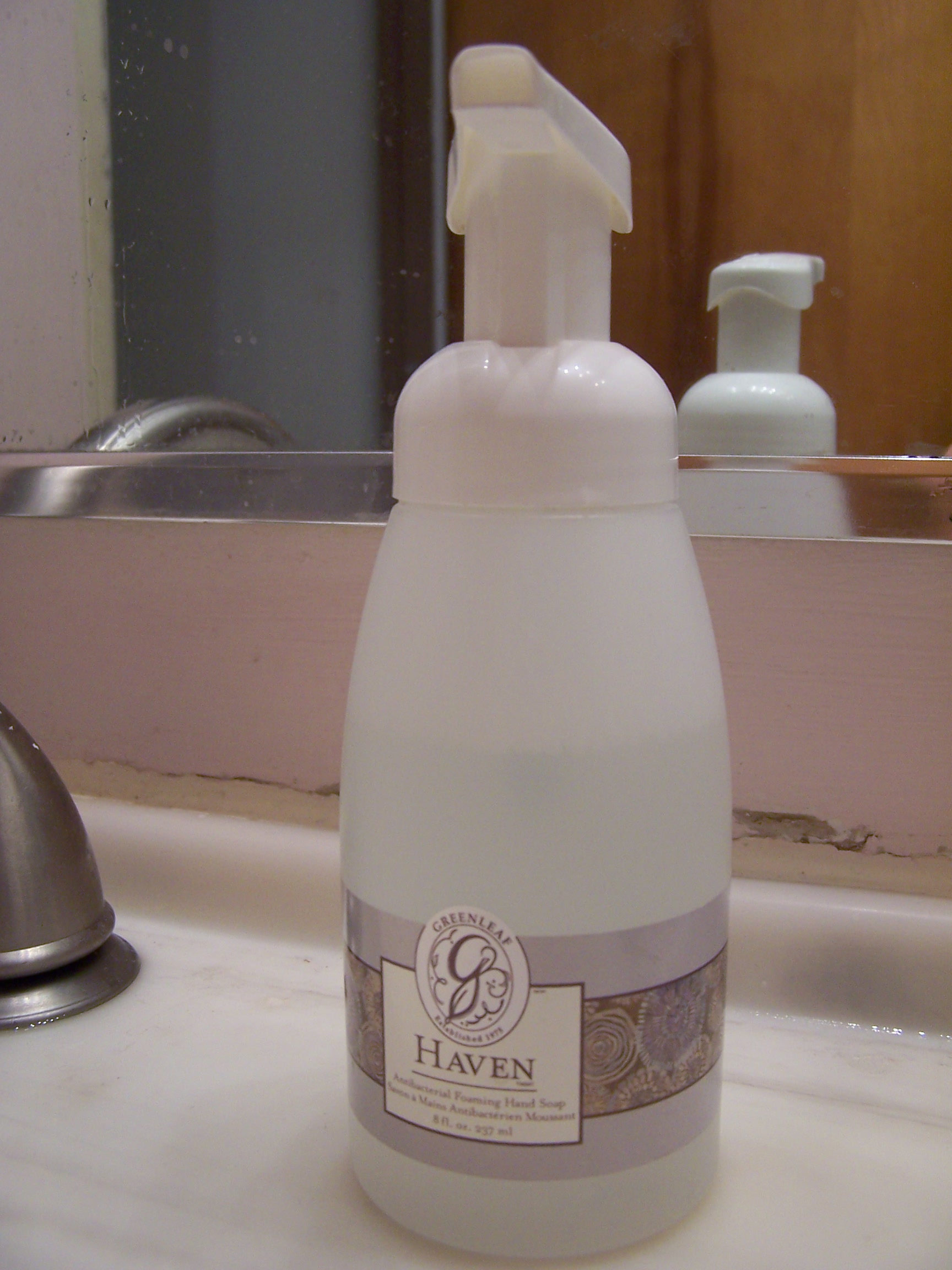
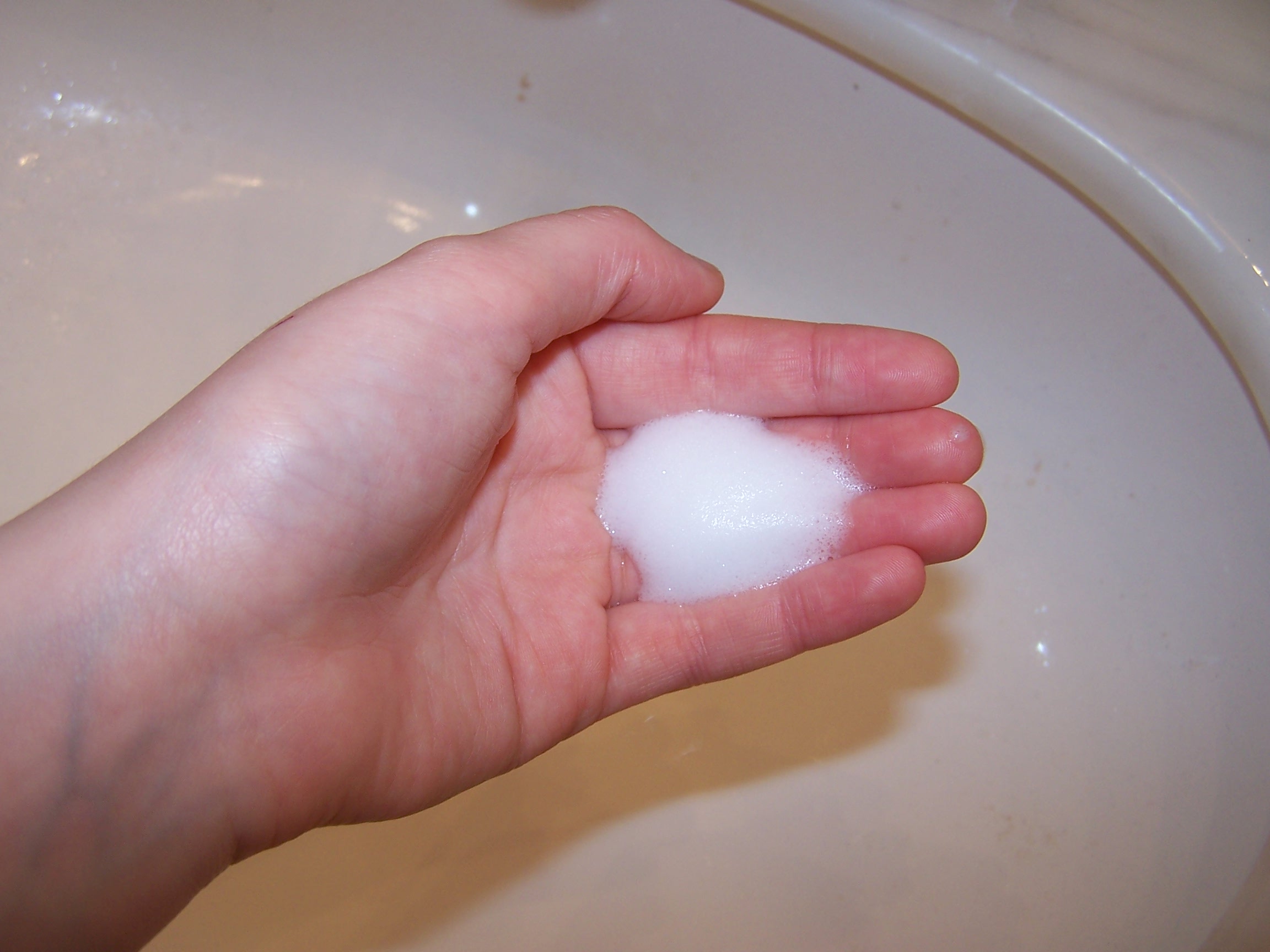
Maybe some of you do this already, maybe some of you don’t, but I am going to share it anyways. If you use or buy liquid soap, one way to make it last longer is to add water to it once it is about an inch down. Keep doing this until it is gone and you make one container of liquid soap last at least 5x as long, if not longer depending upon the strength of the soap. This one has already had water added at least 3x and the soap is still as foamy as it was when it was new.
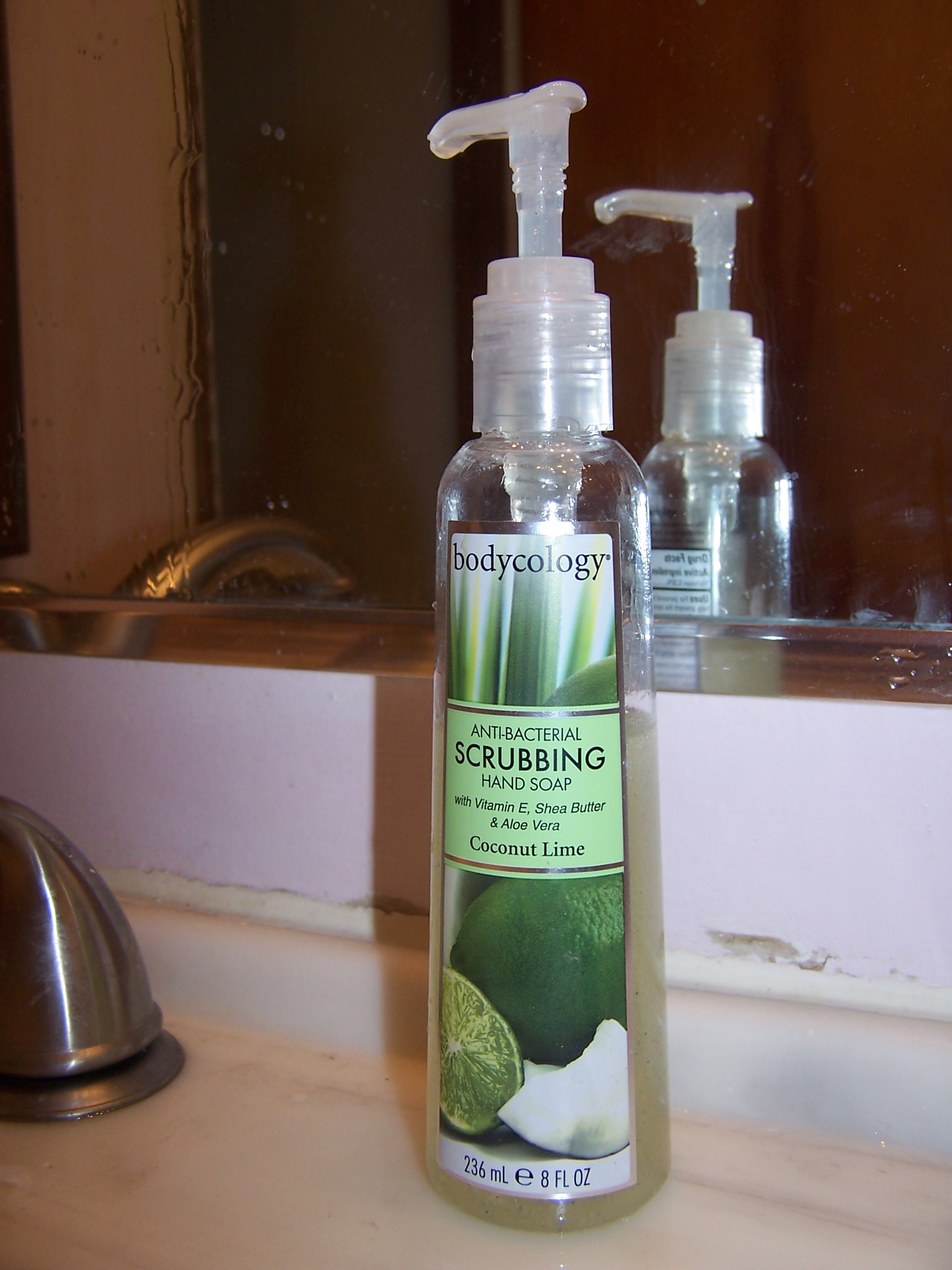
The second soap is a newer pump and has had water added only once. It is due for another dose.
All I do is add the water and shake up the soap dispenser and I usually do not have to shake it up again until I add more water. The idea behind the shaking is to get the soap along the inside walls of the dispenser.
Something New
Submit your own Thrifty Tips for publication here at Faith and Family Reviews. You will be credited with a byline and a link back to your site, if you have one. If not your name will still appear on the post.
Have you ever tried to change your habits or make a new year’s resolution but never seem to stick with it and accomplish what you set out to do? Little switches seem to be what makes new habits stick, rather than huge changes. Slow and steady wins the race, right? It is the little changes that make a difference in the long run.
Little Switches to Healthier Eating
Take the way we eat. Years ago we were a split family when it came to eating, but once children came along we wanted to model good eating habits (for the record we are still working on modeling good eating habits, as we are a work in progress!). When I wanted to switch us over from white bread to wheat bread, I made our bread with half wheat flour and half unbleached flour. Yes, that was back when I was actually making our bread. Then I slowly increased the wheat until we were eating all whole wheat.
I did the same thing for refined white sugar. Although organic cane sugar, sucanat, or honey can pretty much be switched evenly with very little noticeable difference. The honey being a liquid is a bit trickier, but sugar can be decreased in most recipes by about half.
We have also switched from using so much butter to using half applesauce (unsweetened). This is one we have not stuck with very well, but it is a great way to cut down on the fat content in favorite baked goods.
Organic vs Non-Organic
Organic food is expensive, but we try as much as possible to buy organic. Making this switch has been the biggest challenge to our pocket book, but we feel it is an important one for our health and to support the local growers – considering that 98% of our food is bought outside of the state of Illinois!
Buy Local
Buying locally is an area we are currently working on, rather than always giving the “big” guys our money. It is our desire to support the “little” local businesses that are usually family owned and literally dying for business.
This might mean going to the little mom and pop copy store rather than Staples, Office Max or Office Depot. Or it could mean going to the quaint cafe or family restaurant in town rather than a fast food chain. Or simply going to the family owned grocery store rather than a major chain – I know, they are a dying breed.
It is difficult to stick to buying local because it often costs more money to support these businesses than it does to go to the major chain stores. Nevertheless, we are trying to make that switch over ever so slowly.
Little Switches in Daily Life
With spring upon us, one of our family’s goals has been to get up earlier. When our children were all little it was easy because they would be in bed by 7 or 8 o’clock at night and up at 6 o’clock in the morning. Switching from staying up late to going to bed early has been hard but I think it is important for us so we can get up earlier in the morning. I love the long days of summer and want to make the most of them and get a walk in before the heat of the day!
To be successful in any sort of change, I like deciding what is important to us and then moving forward with little switches at a time, making a difference for the long haul.
“I wrote this blog post while participating in the SocialMoms and Cottonelle blogging program, for a gift card worth $25. For more information on how you can participate, click here.”
“ME!” Those two little letters placed side by side form a powerful word that carries a whole lot of attitude! In my neighborhood growing up, we were no exception; my friends and I used to teasingly refer to ourselves as, “Me, myself, and I.” Though we hung out
with each other, we really only looked out for ourselves. We weren’t unusual; we were typical kids.
It’s no secret that children begin life as “the center of the universe.” Unfortunately, many of those childish perspectives cling tightly to us as we grow older. A “giving spirit” doesn’t come naturally; it has to be purposefully cultivated in order to find its way into our
children’s lives.
God’s Design
God creates helpless infants totally dependant on a loving, caring parent to fulfill his or her physical and emotional needs. Depending on what we receive and how we respond to environments, temperaments, and cultural influences, the “self” in all of us can become either “selfless” or “self-centered.”
As we grow, God designed us to mature in our view of ourselves, moving from selfcenteredness to selflessness. Service and giving to others is the central theme of the gospels. Our ultimate example, Jesus, showed the quintessential act of service and selflessness by giving his up his very life. Contrary to the gospel message, our current culture throbs with inward spotlights pulsating their “me-first” message across the nation and world.
Today’s Culture
Especially today, our culture caters to “self.” Born out of the 60s’ “Do your own thing” and “If it feels good, do it,” advertisements, movies, and television shows continue to cater to the immature longings of youth for self-gratification. Our inner child clings to the
immature attitude of “me first!”
Even though we begin life in a self-absorbed state, the desire of God for us is to gain a more mature mindset that takes the focus off self and onto others. If a young child is to move into true maturity, he or she must continually, systematically learn to shift the focus
from self to others – regardless of cultural influence. It’s up to us, as parents, to create words and actions that facilitate the shift.
Here are some tips for parents that will help foster a giving spirit in a “me-first” culture:
Let your child see you purposefully give of yourself to others.
As parents, we’re our child’s clearest example of either selfishness or selflessness. Beginning with simple actions, what we do shouts loudly of our level of selflessness. Do I open doors for others? Do I let others go in line before me, enter the lane of traffic ahead
of me, or take the last item left on the shelf at the store? Do I let others have the last helping at the meal, graciously step back when there’s a crowd of people traveling in the same direction, or let someone speak before I do? Purposefully choosing to embrace and demonstrate the attitude and action of “giving” is the number one way our child will learn to put others first.
At a very early age, set up regular circumstances for your child to practice giving, and give together.
When do we start teaching our child about giving? We begin when our child is born. When my two oldest children were quite small, we’d go once every couple of months to our town’s homeless shelter and pass out apples. When we had four children, we’d all
regularly visit the nearby nursing home to share Valentines or Christmas cookies we’d made. When we had seven children at home and planned to travel to a Russian orphanage, I took some of the children with me to the local stores to ask for clothing and Band-aids donations. Then we filled a suitcase together before the trip. These are just a few of the many circumstances that we can purposefully create to give of ourselves to others. Even little children can save pennies in a jar for a missionary family or walk the
streets with you on a mission trip. When your children see you consistently practicing giving your time and resources to others, they’ll experience first-hand the value – and positive feelings – of giving.
Speak about and then practice sharing.
The way to begin a personal attitude of sharing is to speak words of generosity and giving. “It’s good to share. It’s wonderful to give to others. It’s a great thing to give of ourselves.” Positive words lead to positive actions. Once spoken, we can help our child find ways to give. “It’s good to share. How can we share this bushel of apples that we just picked?” “It’s wonderful to give to others. How can we give of ourselves to the neighbors that just moved in?” Once we’ve verbally affirmed the positives of sharing and spoken with our children about what can be done, we can then go and do it.
Point out and praise the generosity of others.
Giving is all around us. Verbally affirming others’ generosity teaches our children to recognize generosity; it also gives us new ideas of how to share ourselves with others in the future. Read aloud the newspaper article about a generous individual’s impact on the town. Talk to the kids on the corner volunteering at a car wash/fund-raiser to raise money for the youth group’s trip to Haiti. Visit the ministries in your area that directly touch lives, such as shelters, food kitchens, and food pantries. Notice everyday acts of kindness, affirming the generosity with words such as, “Did you see how that young man opened the door for the older couple? Wasn’t that a kind thing to do?” Make it a practice to find and praise the goodness and generosity all around you.
Make it a priority to purposefully teach your child to be generous. With practice, we can foster a giving spirit in our child, no matter what the culture says.
About the Author
Erin Brown Conroy, MA, is a writer specializing in books on relationship connections, curriculum, and web marketing. She is a freelance writer/consultant, the DL Professor of writing courses for Patrick Henry College, and a Master Teacher for the PHC Prep Academy Online. Erin is also the mom of 13 children by birth, marriage, and adoption and has been homeschooling for 27 years. She lives in Ohio with her husband, five children still at home, and three amazingly-smart (and cuddly) Australian Labradoodles. You can read more of Erin’s articles on parenting at www.erinbrownconroy.com.
Leaving the grocery store the other day I picked up a free magazine called Natural Awakenings (March 2011) Edition. I found this article – “A-Peeling Reuse” by Jeff Yeager. It goes onto say…
“A rind is a terrible thing to waste,” says Jeff Yeager, who refers to himself as the ultimate cheapskate. Yeager has discovered multiple uses for produce rinds and ways to extract extended benefits before they land in the compost pile. Here are a few of his favorites, shared with us during a recent interview:
Cornhusks – Wrap fish and other seafood in fresh, dampened, sweet corn husks to grill and serve in husks.
Olive oil infusions – Add citrus peels to olive oil for flavor and to reinvigorate oil that’s getting old.
Savory Chicken – Stuff all kinds of fruit and veggie peels, inside a free-range chicken before roasting to give it extra flavor. Trimmings from onions, celery, citrus, apples garlic, etc., can be stuffed in the chicken cavity or sprinkled around the roasting pan. Once baked, the trimmings break down faster in the compost pile.
Hair Dye – Boil potato peels in water for about a half-hour, strain and let cool. Rinsing hair with this water after shampooig will gradually darken grey hair without any synthetic chemicals.
Shoeshine – Put a “split-shine” on leather shoes by polishing them with the slippery side of a banana peel.
Metal Polish – Lemon, lime, and other citrus rinds and pulp/juice are high in citric acid, which makes them great for polishing brass, cooper and other non-ferrous metals. Sprinkle on a little baking soda to hasten polishing (Ketchup works, too).
Seedling Pots – Scooped-out avocado shells make perfect biodegradable pots to start garden seedlings.
Note: Always thoroughly wash the rinds of produce that will be eaten or come into contact with food, even if it is organically grown.
Jeff Yeager is the author of The Cheapskate Next Door and The Ultimate Cheapskate’s road Map to True Riches.”
I went to Yeager’s website at www.ultimatecheapstake.com, and he’s really got great ideas. There’s one for egg shells, perfect since Easter is coming.
Here are a few tips for recycling old coffee grounds in your garden:
Add used coffee grounds to the pots of indoor plants.
Work used coffee grounds into your garden soil before seed planting. After your plants start to emerge, work in coffee grounds near the plants. Used coffee grounds are said to repel snails and slugs as well as adding nutrients to the soil.
Increase your carrot and radish harvest by mixing seeds with dry coffee grounds before planting the seeds.
Use coffee grounds to repel ants.
Keep cats from using your garden as a kitty box by spreading used coffee grounds and orange peels throughout flower beds.
Keep bait worms alive by mixing coffee grounds into the soil before you add worms.
Grow mushrooms on old coffee grounds.
Fertilize plants. Old coffee grounds are nutrient-rich for plants that thrive in an acidic soil.
When you come in out of the garden, remember washing your hands is a great defense to prevent infection.
Defending you and your family from germs can be a full time job. According to many health experts, your first line of defense is handwashing, and according to the Mayo Clinic, hand washing is a simple habit that can help keep you healthy.
Young Living makes products so pure, you can eat them. All three soaps use the power of Thieves essential oils to clean, yet they are gentle to the skin. Thieves Foaming Hand Soap, Thieves Waterless, Hand Purifier, and Thieves Cleansing Soap are effective, non-toxic, germ-busters you will want to stock up on. This personal testimonial comes from Leslie Stoddard of Idaho Falls, Idaho, “Many times when we have experienced symptoms of a cold or flu virus beginning, we have used the oils and our symptoms have vanished quickly and do not return.”
Please click here to read additional information regarding the Thieves line of powerful and versatile household products.
This will be short and sweet because I have a ton of things to do today. What is motivating me this week? Business. We have a last minute trade show to attend this coming weekend, thanks to my client. She asked me if my daughters and I wanted to work it for her and have our own booth beside hers. Me being me said sure! Getting paid and not only promoting her business but ours as well, definitely a no brainer. Thankfully we are non competing or else she would/could not have done that. By the way, I love my clients!
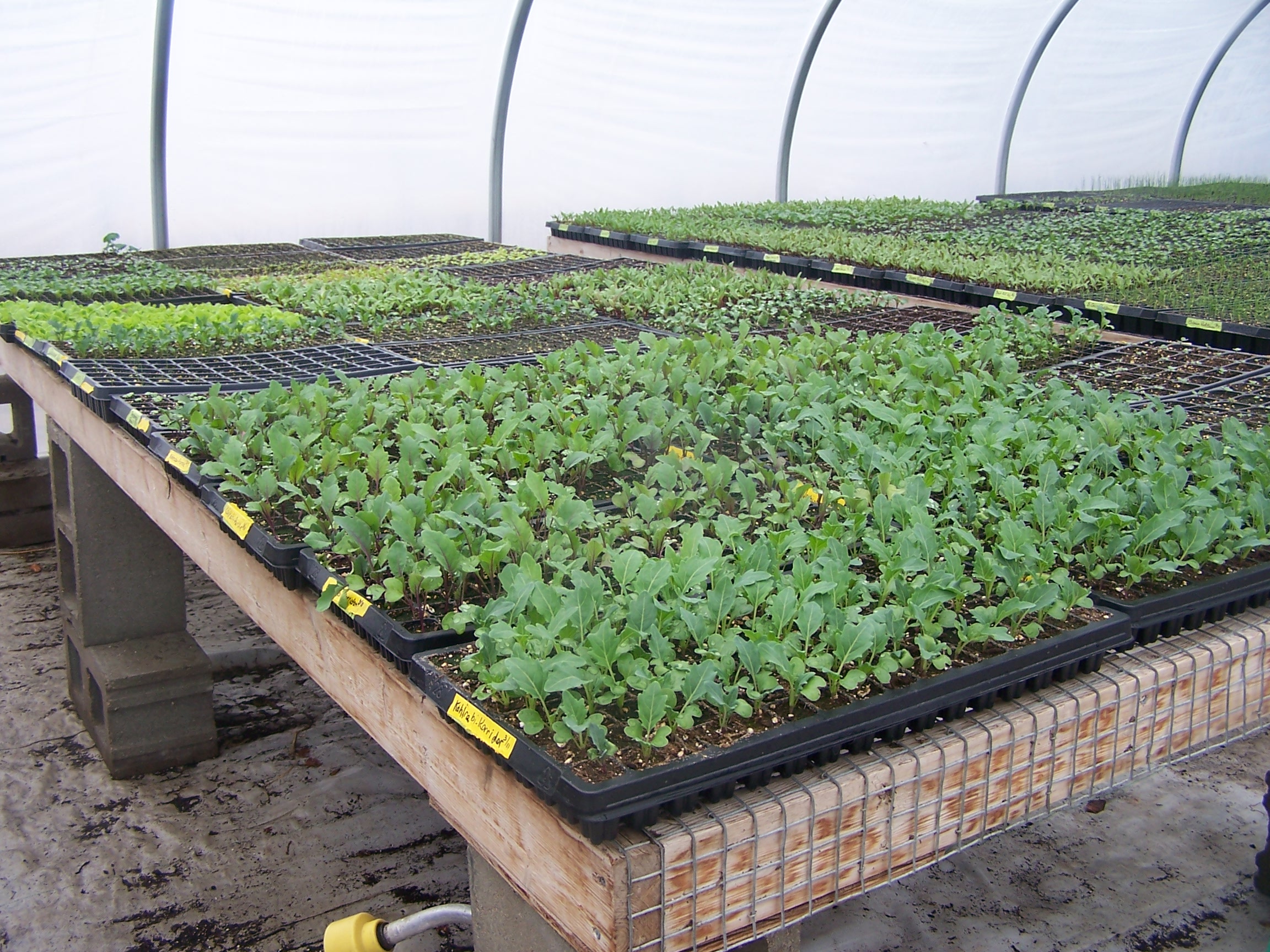
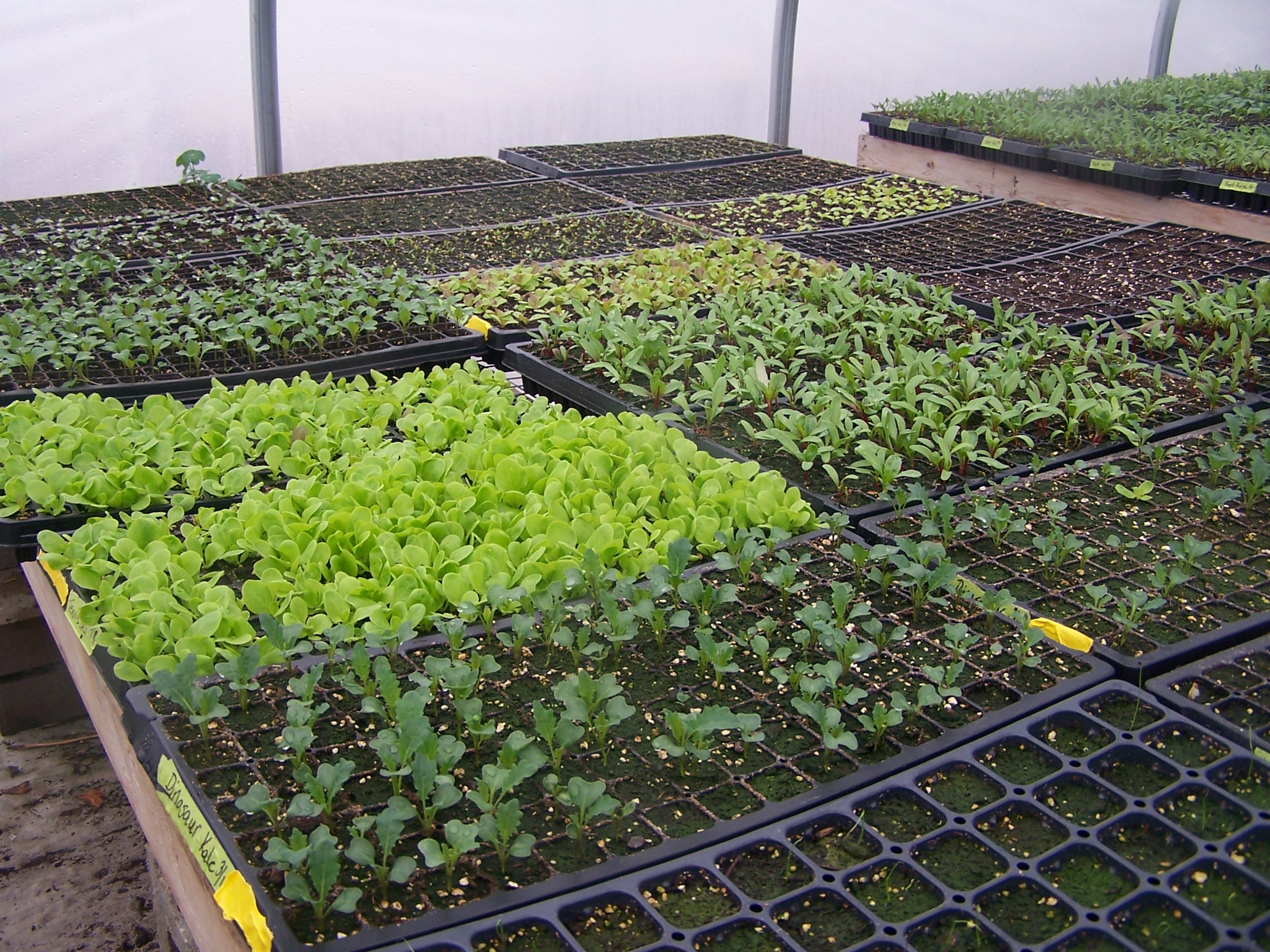
With that said, I have so much to do my mind is spinning! Thankfully, my assistant is ahead in her work and can help me with daily tasks while I am in my business whirlwind. We are trying to get ahead and stay ahead in preparation for the growing season. Nothing like staying busy. Oh and speaking of growing season, here’s recent photos of the plants in the greenhouse:
If you have your own business, do you get excited about opportunities? I do. It seems silly in some ways, yet it must be rather normal too. In most cases work gets my adrenaline pumping, as do opportunities. I think my client has great products that support worthy causes and I think we offer great products that provide people alternatives to managed health care.
So there’s my motivator this week.
Last week’s motivator resulted in two clean bedrooms that were quickly messed up. Sigh.
Writing is a skill and talent, no doubt about it. I have always wanted to write a book and have it published, but I have only got as far as ideas on paper. Well, unless you count the little e-book that I wrote but never promoted. A lot of good it’s doing sitting on my hard drive, eh? Other writers have seen their dreams come true in the book publishing world. Tina Turbin is one of them, as she has become an award-winning children’s author.
Tina is the creator and author of Danny the Dragon. Danny the Dragon is a lovable character that teaches children kindness, helpfulness and good manners. He is the main character in Danny the Dragon Meets Jimmy, which is the first book in the Danny the Dragon book series. The book is on DVD, CD, as well as an app for deaf children by iStoryTime, the iPhone App Developer for DreamWorks Animation’s How to Train Your Dragon. Read more…
In the last year Tina has been awarded the following awards:
International Book Awards Finalist -Children’s Novelty & Gift Book 2010
National Indie Excellence Awards Finalist -Children’s Picture Book 2010
Mom’s Choice Awards 2010- Silver Recipient
Disney Media, Parent’s Choice Award 2010
What an incredible honor to be recognized with these rewards.
Tina is not only recognized for her literary skills and children’s literacy but also for her passion for celiac disease. She educates and shares her knowledge and research at GlutenFreeHelp.info, a non-profit website dedicated to offering information about gluten free living.
We reviewed Tina’s book last year. You may read it here. The DVD review is here and an interview I did with Tina is here.
I have had the privilege of working with The Motherhood team several times over the past year. I still have no idea how they found me, but I am grateful to the person who connected me with them because the opportunities they have provided me with have allowed me to earn extra income and have some great experiences with my children. Emily, Cooper and Erin (Sorry if I left anyone out, but these are the main three I have been in contact with – mostly Erin though!) are a wonderful group of ladies to work with; and since I have had such a positive experience working with them on some major brand campaigns – 77kids, Wendy’s, Scott and more (One is coming up that will last for four weeks!) – I wanted to put the word out that I just read on their website they are hiring more mom bloggers! Visit their contact page, fill out their form and wait to hear from them.